How Capability, Culture, Cadence and Outside-In Thinking is the Real Strategy.
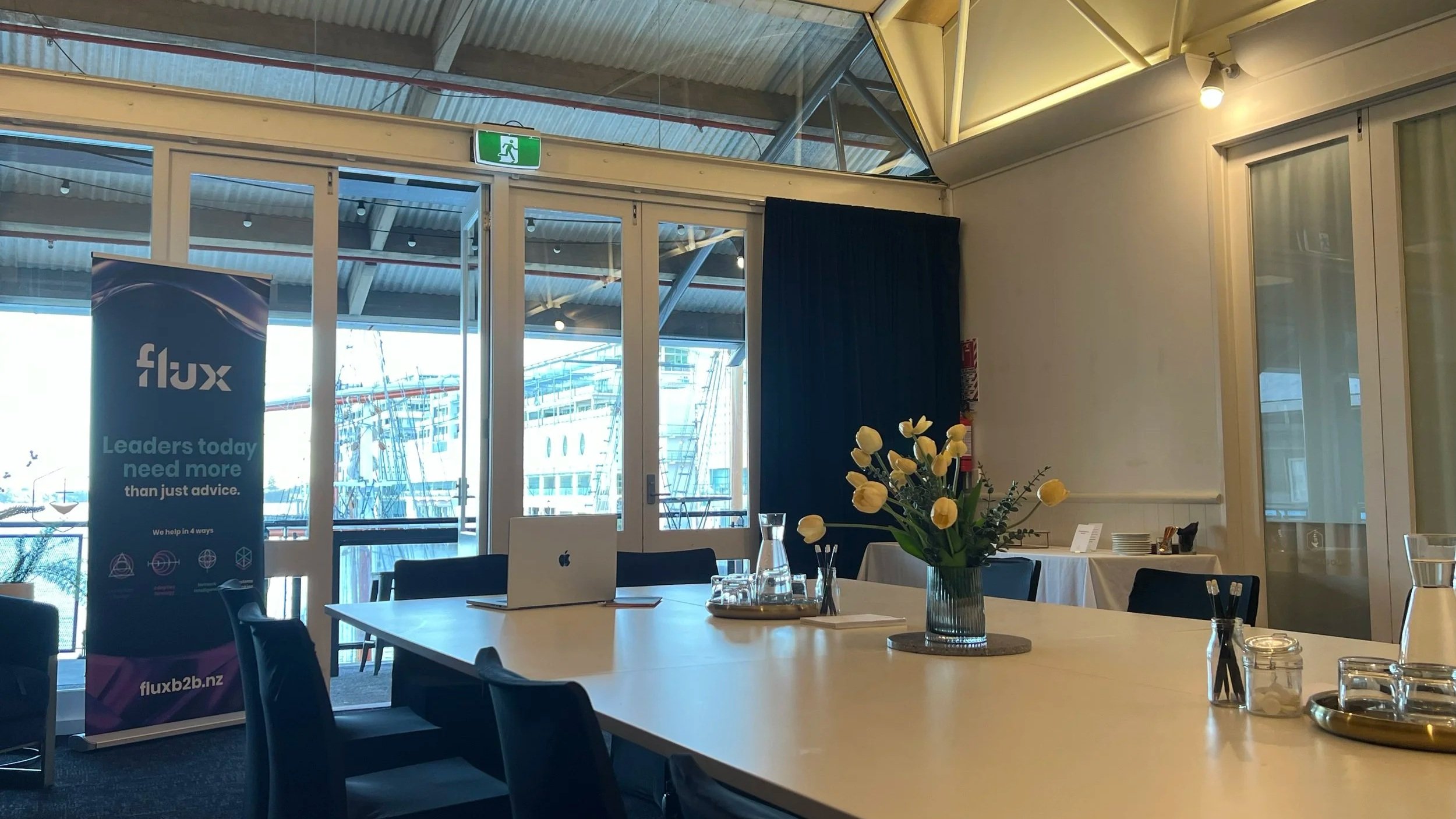
Auckland CEO Tables – Nov 6th & 7th
Auckland closed the year’s final CEO Tables with two unique conversations: one with a returning cohort who’ve shared a long strategy journey together, and another with a fresh group of CEOs stepping into the room for the first time.
Different industries, different stages, different personalities but a strikingly similar truth emerged across both days:
Strategy is never the problem.
Execution is where things break and where advantage is ultimately created.
These were two tables defined by raw honesty. These Auckland CEOs spoke candidly about capability gaps, leadership strain, culture drift, change fatigue, and the growing need to break free from the New Zealand echo chamber.
They shared the moves that freed up momentum, and the ones that drained it. And, as is the purpose of these tables, they offered each other perspective, not advice. Perspective grounded in reality, in being human, and usefully uncomfortable.
Here’s what Auckland taught us.
Strategy Is the Easy Part - Execution Lives in People, Capability and Culture
Across both days, CEOs described an abundance of ideas and strategic direction but a shortage of leadership bandwidth, capability, and cultural alignment to carry the weight.
Everyone had a strategy.
Not everyone had the team to deliver it.
Repeatedly, we heard CEOs admit that the crucial question “Do we actually have the skills, depth and capacity to pull this off?” - is almost never asked at the moment strategy is set.
It surfaces halfway through the year, when key results slip, teams fatigue, or long bets stall under the weight of operational reality.
Common patterns emerged:
Inherited leadership teams limit execution
Several CEOs shared the complexity of inheriting leaders they didn’t choose. Reshaping that layer takes time and creates drag, yet avoiding it compounds the cost. One CEO put it plain and simple:
“You can inherit your leadership team, but you still have to eventually choose what to do with it.”
Culture sets the pace - for good or for slow
Culture showed up not as a soft concept, but as the determinant of execution speed:
What behaviour is tolerated
How quickly people move
How truthfully performance is addressed
How decision rights flow (or bottleneck)
These became the real constraints on growth.
Planning cadence reveals capability
Many CEOs described moving from annual → quarterly → six-week → fortnightly cycles to tighten focus and expose capability gaps earlier. One CEO noted that quarterly OKRs had unintentionally created “12-week work units” rather than pace. Switching to six-week cycles forced sharper prioritisation and real ownership.
“This year reminded us that clever thinking is the easy part.
Everything comes down to capability, the leadership team, and the culture that sits around them.”
Change Fatigue and the CEO as the Shock Absorber
Auckland CEOs gave voice to something many feel but rarely articulate publicly. The emotional heavy load of leading through relentless change.
After years of restructures, efficiency pushes, reorganisations, new systems, rising cost pressures and shifting board expectations, many teams are simply tired. Strategy, even good strategy, can land as “more work we don’t have time or energy for.”
This has reshaped the CEO’s job in a subtle but profound way.
The CEO as buffer
Across both days, CEOs described acting as the filter between the board/founders’ ambition and the actual “absorption” capacity of the organisation.
One called it: “Protecting the team from whiplash.”
Cadence redesigned for energy, not just execution
Many CEOs no longer see cadence as a project management tool but as an energy management system:
Shorter cycles to maintain momentum
Sequencing “one big thing at a time”
Over-communication to reduce uncertainty
Building quick wins to restore confidence
Resetting decision rights to reduce escalation cultures
Leadership as emotional labour
For some, the most draining part of the role was not the strategy itself, but actually the emotional weight of leading tired teams through yet another transformation.
“We’ve moved from reacting to everything to one significant project at a time,
one big thing on top of the base load.”
Escaping the New Zealand Echo Chamber - The Emergence of Outside-In Strategy
Perhaps the most striking Auckland theme was the increasing awareness of New Zealand’s strategic echo chamber.
Small markets create narrow patterns.
Narrow patterns create narrow strategy.
CEOs described leadership teams made up of people who’ve grown up in similar-sized markets, in similar sectors, with similar experiences. The result was that strategy conversations risk becoming circular.
Across the table, CEOs shared how they’ve been breaking that loop.
Bringing in global experts and fractional capability
Several CEOs talked openly about the impact of bringing in global specialists not to validate their strategy, but to challenge it.
One CEO called it “the big pivot”:
“Big outside-in points of view helped us.
If you want to be brave, bring in people who don’t know half of this, that was the unlock for us.”
International immersion as a strategic reset
A number of leaders spent time offshore this year — in the UK, US, APAC — meeting industry peers who are scaling at different speeds and with different constraints. These conversations broadened benchmarks and collapsed limiting beliefs.
Capability is not headcount. It’s thinking diversity.
The strongest stories came from CEOs who stopped trying to solve everything with the team they already had and brought in specialist help to crack a stuck market, unlock commercial growth, or sharpen product direction.
Customer support as a strategic differentiator
Several CEOs on Day 2 reinforced the idea that exceptional post-sales support is no longer a cost centre — it is shaping buyer decisions, retention, and even new deal flow. Customers are using support responsiveness as a proxy for value.
“New Zealand is an echo chamber. If you’re not careful, you end up reaffirming what everyone already believes.”
Watch-Out Pattern: When Ownership and Governance Quietly Poison Culture
Without naming companies, a more sobering pattern surfaced across both days, that misaligned boards or majority owners can quietly erode culture long before the numbers show it.
This wasn’t theoretical; it came through lived experience. CEOs described situations where owners optimised for something other than a healthy, growing business (e.g., property plays, short-term exits, personal comfort). The cultural fallout was inevitable:
Distrust
Good people leaving
“Mysterious” engagement drops
Strategy stalling in hidden ways
Executive teams paralysed by unclear direction
And by the time these signals reach the CEO’s desk, the corrective moves are usually expensive, restructuring boards, buying people out, rebuilding trust almost from scratch.
“It can take a long time for governance misalignment to show up in the numbers.
By then, a lot of cultural damage has already been done.”
How Auckland CEOs Are Moving From Reaction to Advantage
Despite the challenges, Auckland was full of practical plays that CEOs are using to shift from reactive firefighting to strategic leadership:
1. Sequencing just one “big strategic project” at a time.
Reducing cognitive load, lifting quality, and increasing throughput.
2. Shrinking cadences for focus and accountability
From quarters → 6 weeks → fortnightly leadership forums.
3. Reshaping leadership layers.
Reducing direct reports, clarifying lanes, and resetting decision rights.
4. Building capability through external expertise
Fractional specialists, advisors, global benchmark partners.
5. Empowering the next layer of leaders
Moving teams away from escalation cultures into ownership cultures.
One CEO summed this up well: “By the time you walk from your desk to mine, you already know the answer.”
6. Turning customer support into a competitive advantage
CEOs highlighted support as a revenue driver, not a cost line.
7. Using AI-first experimentation to unlock confidence and capability
Giving teams permission to explore tools, not wait for approval.
All of the above were not theoretical models, they were actual survival moves that became strategic advantages for the CEO’s in the room.
The Capability to Lead is the Capability to Adapt
As Auckland wrapped up, CEOs aligned on one truth:
Strategy isn’t a tactical document or a tick box exercise.
Strategy is a critical capability, and increasingly, a human one.
In 2025, the consensus is advantage will come from:
the quality and depth of leadership teams
the momentum and honesty of culture
the courage to bring in outside capability
and the discipline to protect teams from unnecessary noise while still moving forward.
When strategy becomes adaptive, leadership becomes shared, and culture becomes an accelerator, the shift from reaction to advantage stops being a slogan and starts becoming real. The Auckland CEOs left the table inspired and more focused.
And next year, the work continues.
ABOUT THE AUTHOR