What AI Is Revealing About the People in Your Business
May 2026
We asked the same question in three cities. The answers were the same.
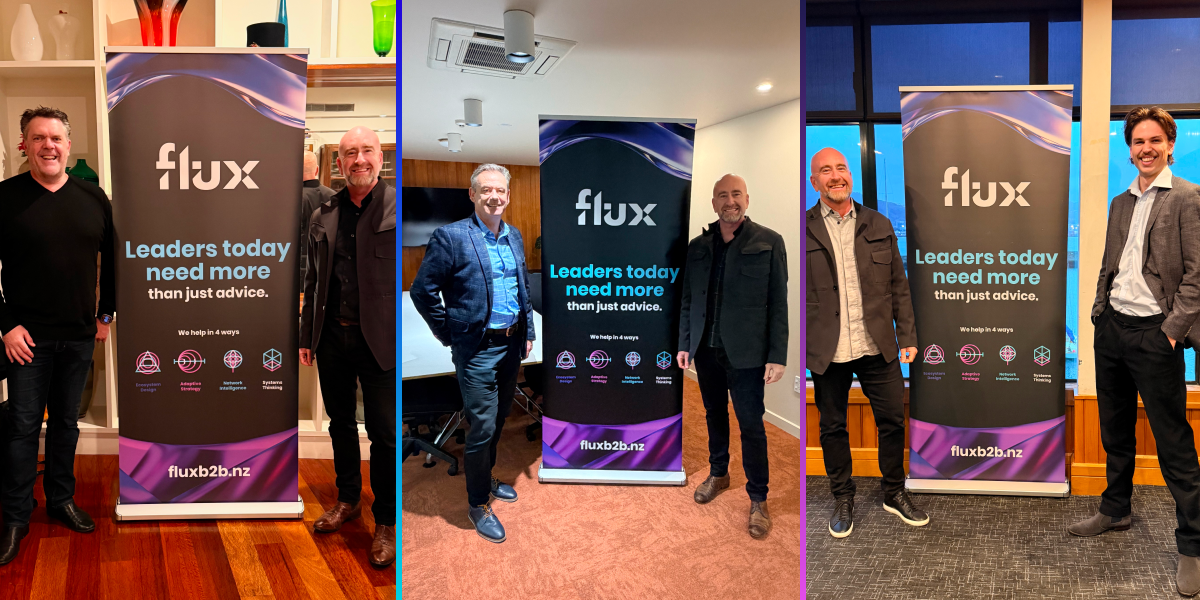
In May, we ran CEO Tables in Christchurch, Wellington, and Auckland. The theme was People Intelligence — not AI, though AI was in every room. The question we put to each group: what has AI revealed about your people?
It's a different question from "how are you using AI?" It assumes AI has already shown you something and in every room, it had.
What the three tables confirmed — across different industries, cities, and pressures — is that the businesses moving fast aren't the ones with the best tools. They're the ones with the right culture, and the technology doesn't hold back the ones stalling. They're held back by something more fundamental: identity, risk appetite, and the kind of judgment that only comes from experience.
The real blocker is culture, not capability
All three rooms confirmed it. The businesses stalling on this aren't held back by access to tools or budget. They're held back by cultures that don't allow for fast failure — cautious, traditional frameworks applied to a moment that demands the opposite.
“If you stop today, you’re screwed tomorrow.”
What this means for CEOs: the pace of change is no longer neutral. Waiting is a decision, and it has a cost. The leaders moving fastest had all made a deliberate call to experiment before the picture was complete. They set a clear direction, gave their people permission to fail inside it, and treated the discomfort of moving without certainty as part of the work. One CEO built an entire team culture around "we fail as a team, not you as an individual." Six months later: 30% efficiency gain, zero hand-written code. The culture preceded the result.
Identity: the shift most leaders haven't named yet
This was the thread Wellington pulled on most directly, and it connected to everything else across all three tables.
AI adoption is faltering in many businesses because people's sense of self is tied to their tasks. A developer who defines themselves by writing code has an identity problem when that goes, not a skills one. So does the architect who built a career behind technical complexity and now has to walk into a room of non-technical stakeholders and hold the conversation. Training doesn't fix that. The intervention required is different, and most leaders are reaching for the wrong tool.
“There has to be an identity shift for a lot of people to be successful. And they have to actually understand that.”
What this means: the CEO's job right now is partly a translation job. Helping people understand that their value is the judgment, the relationships, the customer context, the meaning they bring to the work — not the task itself. Christchurch named it most plainly: the stories are being lost. AI lays out the buffet. A human still chooses the à la carte menu. The leaders getting this right are actively naming the shift for their teams, not waiting for people to figure it out alone.
Judgment: the thing you can't accelerate
Wellington's observation that every room came back to: older workers are adapting to AI faster than younger ones. The reason is judgment, built through years of making calls, getting burned, and knowing the difference between output that looks right and output that actually solves the problem.
“What you do is not your value. You are broader than your title.”
Several Auckland CEOs have changed what they hire for — curiosity, risk appetite, and learning mindset over credentials. One CEO's filter for every candidate: what have you learned recently, and can you tell me about it? Professionalism was also redefined in the room: the structured, disciplined way of working you bring to the job. Sloppy input gets amplified slop. Disciplined input gets amplified quality.
The longer concern, raised in Wellington: if businesses stop hiring juniors today — and most are, because revenue pressure makes it hard to justify — who becomes the senior in five years? The pipeline is thinning, and nobody had a clean answer. The leaders thinking ahead are protecting their junior intake even when the short-term economics argue against it.
The question above the CEO
Auckland named something the other tables had felt but not fully said: boards are asking the wrong question.
"Do we use Copilot or ChatGPT?" is a procurement question. The governance question — the one boards should be holding — is about strategic direction, what principles govern where AI stops, and what is happening in the market while the organisation looks inward at efficiency. One CEO at the Auckland table is actively researching which competitors are going under, where the JV opportunities are, which clients need securing now. That's the level this moment calls for, and most boards aren't operating there yet.
“CEOs once drove profit, full stop. Now the CEO’s job has become the people and culture job.”
That came from Christchurch. The CEO is now the one holding identity change, shielding culture under load, and making the calls about what the organisation is willing to try — often without much support from the room above them. The governance gap is real, and it's the CEO who carries it.
What it means for you
The question we put to every table is worth sitting in front of yourself: what has AI revealed about your people?
What it tends to reveal is the adaptive capacity of the business — which is a direct reflection of the culture the CEO has built and the identity clarity they've created in their team. You can have excellent tools and a frozen team. You can have a team moving fast and learning every week with modest resources. The difference isn't technology.
The CEOs who came to these tables weren't there because they had the answers. They were there because they take the questions seriously — and because some conversations only happen when you're off the record, with people facing the same thing, and nothing to sell.
If that sounds like somewhere you need to be, put your name forward below.